
Fit Testing Respirators vs Beards and Religion
 Religion vs Regs
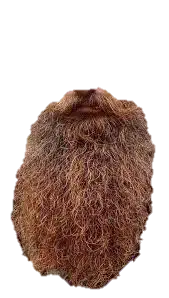
Beards vs Regs are a heated subject right now in BC. At this very point in time the legality of beards, respirators and regulation are being looked at very closely by certain organization on both sides of this coin. With that being said, as of this day it was stated by a WorkSafe BC OSO (Occupational Safety Officer who will remain anonymous) in such a way that clearly defines the stance WorkSafe BC has on the matter. He said, and I quote “Religion DOES NOT trump Safety in BC.”
Beards and Religion
Beards have been around since the beginning of time, so has religion. There are millions upon millions of men on this planet who have beards, and and millions more who have one for religious reasons. In some cultures and religions it's almost imbedded into their very DNA at birth. Below are some of the more recognized religions where as a beard is very significant.
Sikhism:
- Uncut hair (kesh), including facial hair for men, is one of the Five K's and is considered sacred. Shaving is strictly forbidden.
Islam:
- Many mainstream denominations consider growing a beard and keeping it trimmed to a specific length to be a mandatory religious practice (Sunnah) in emulation of the Prophet Muhammad.
Judaism:
- Ultra-Orthodox (Haredi and Hasidic) men do not cut their beards based on the Torah's prohibition against shaving the corners of the face with a razor.
Amish & Hutterite:
- Men are clean-shaven until they marry, after which they grow a beard and never shave it again. This signifies manhood and marital commitment.
Cultural:
Having some Scandinavian ancestry in my bloodline, I can fully understand the cultural aspects of beards Vikings routinely had beards. In fact most men did back a thousand years ago. It was more then cultural, it was actually a safety aspect to it. In all kingdoms that had a standing army or groups of warriors a beard acted as padding if you got hit. Itr also padded the face from the steal if one was rich enough to afford armour, with a helmet and faceshield.
Why Religion Does Not Override Respirator Safety Requirements
Potential Hazards on a BC Construction Site
Construction sites in British Columbia contain many dangerous airborne hazards that can seriously injure or kill workers. These hazards include silica dust from cutting concrete, asbestos fibers during demolition, welding fumes, wood dust, chemical vapors, mold spores, and smoke particles. Many of these airborne contaminants are invisible to the human eye, yet they can permanently damage the lungs, cause respiratory disease, or lead to cancer. Because of these risks, British Columbia law requires employers and workers to follow strict respiratory protection rules.
Safety Requirements
One of the most important Safety Requirements is the use of properly fitted respirators. A respirator only works if it creates a tight seal against the worker’s skin. If air can leak around the edges of the mask, the worker may breathe contaminated air directly into their lungs. For that reason, WorkSafeBC regulations require workers who wear tight-fitting respirators to be clean shaven where the respirator seals to the face.
Regulations for these Requirements
The law is very clear on this issue. WorkSafeBC Occupational Health and Safety Regulation 8.39(2) states:
“A worker required to wear a respirator which requires an effective seal with the face for proper functioning must be clean shaven where the respirator seals with the face.”
So, once again, Religion DOES NOT trump Safety in BC
WorkSafeBC Regulation 8.40 also requires respirator fit testing to ensure the respirator seals properly before a worker uses it on the jobsite.
WorkSafeBC Respirator Regulations
WorkSafeBC Guideline G8.40 – Respirator Fit Testing
Science behind the Regulation
Some workers may believe religious beliefs or personal preferences should allow them to keep facial hair while wearing a respirator. However, safety laws are based on scientific testing and hazard prevention, not on personal opinions or individual preferences. If a respirator cannot seal correctly because of facial hair, then the respirator cannot provide the protection it was designed to give. In that situation, the worker remains exposed to dangerous airborne contaminants.
Facial hair causes problems because even short stubble creates tiny openings between the respirator and the skin. Air follows the path of least resistance. If there are gaps around the mask, contaminated air can leak inside instead of passing through the respirator filter. This means the worker could still inhale harmful dusts, fumes, or fibers even while wearing the respirator.
Human hair is much larger than many airborne contaminants found on construction sites. Fine human hair can range from approximately 17 to 180 microns thick, while beard whiskers commonly range from 80 to 180 microns thick. Heavy facial stubble may measure between 100 and 300 microns thick depending on the person. By comparison, silica dust particles are often only 0.5 to 5 microns in size, and welding fumes may be smaller than 1 micron. This means the gaps created by facial hair can be many times larger than the hazardous particles the respirator is supposed to block.
This is why fit testing is legally required. Fit testing checks whether a respirator properly seals against the worker’s face. WorkSafeBC requires fit testing before first use, at least annually, and whenever facial changes or different respirator models could affect the seal. A worker who is not clean shaven where the respirator contacts the face cannot properly pass an approved fit test.
Safety laws apply equally to everyone on a construction site because airborne hazards do not care about personal beliefs, culture, or religion. The employer has a legal duty to provide a safe workplace, and workers have a legal duty to follow safe work procedures.
Alternative PPE
If a worker cannot safely wear a required respirator because of facial hair, the employee will need to make a decision. Alternative PPE is available. However it is very expensive and as far as I understand, employers are NOT obligated to cover those cost except for one reason only. That reason being of a medical concern. For example, if a worker had an allergic reaction to the materials used in the manufacturing of a respirator. One reaction and a very serious one would be swelling of the workers face and or neck area. This could most likely close of the airways of the worker.
A medical exception would most likely need to be documented by a medical doctor and or any other requirements WorkSafe BC may ask for. When established as a legitimate legal exemption, then an employer would be obligated to provide at no cost to the employee the required protection.
(1) A worker is responsible for providing
(a) clothing needed for protection against the natural elements,
(b) general purpose work gloves and appropriate footwear including safety footwear, and
(c) safety headgear.
(2) An employer is responsible for providing, at no cost to the worker, all other items of personal protective equipment required by this Regulation.
(3) If the personal protective equipment provided by the employer causes allergenic or other adverse health effects, the employer must provide appropriate alternate equipment or safe measures.
(4) Nothing in this section precludes or alters an existing or future agreement between a worker or workers and an employer to the effect that the employer will be responsible for the provision either at no cost or some cost to the worker, of any or all of the items described in subsection (1).
Under Mask Beard Covers
A study for a system to bring harmony between religious concerns and safety was conducted called “Efficacy of Under-Mask Beard Covers in Quantitative Fit Testing of Tight-Fitting Disposable Respirators” and can be fully read on the WorkSafe BC website.
The study was to see if a covering over a beard could be used to ensure a seal of a respirator to a persons face who had a beard. Prepared by Dr. Craig Martin, Manager Medical Services, Evidence-Based Practice Group in May of 2023 the results were as follows:
Summary
There is no high-quality evidence supporting the efficacy and/or effectiveness of under-mask beard covers in quantitative fit testing of tight-fitting disposable respirators.
There is very low level, low quality preliminary evidence pointing toward the use of under-mask beard covers for improving the likelihood of reaching the quantitative fit testing standard that warrants further controlled studies.
At least one additional higher quality, controlled study is ongoing and awaiting results.
PAPR and SAR
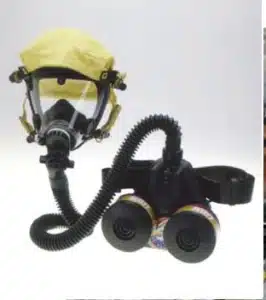
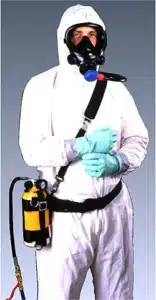
PAPR and SAR at a glance. Powered Air-Purifying Respirators (PAPRs) and Supplied-Air Respirators (SARs) are acceptable alternatives to a fit tested respirator. The system workers with beards will need to use is one that does not require a fit test. A loose fitted one is designed were the mechanically pumped in air entering the system is of a greater pressure then that of the air pressure outside the general area of the workers presence. At sea level Standard atmospheric pressure at sea level is approximately 101,325 Pa or 101.325 kPa. It is defined as exactly 1 atm (atmosphere)
These work in such a way that with a loose fitted head gear the internal pressure being greater than the outside pressure doesn’t allow contaminates to enter the gaps that are present in the system.
Differences between a PAPR and SAR systems
Powered Air-Purifying Respirators (PAPRs) and Supplied-Air Respirators (SARs) both deliver a constant stream of breathable air but achieve it differently. PAPRs filter and recirculate ambient air via a battery-powered blower, whereas SARs connect to a stationary, external source of clean compressed air.
To enquire about getting your crew fit tested you can read more at
Respirator Mask Fit Testing, Mobile Service, Vancouver – Fraser Valley
Beards and Religion is an issue that will continue to be a huge subject in BC
Lower Mainland * Metro Vancouver * Fraser Valley
BOOK APPOINTMENT NOW
or click on the eagle to call us right away schedule your Respirator Fit Testing
